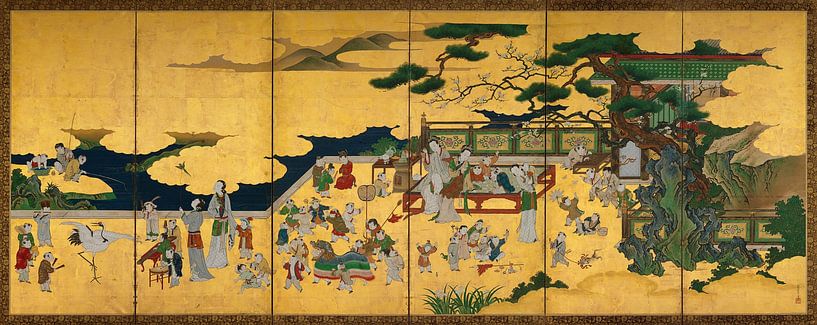


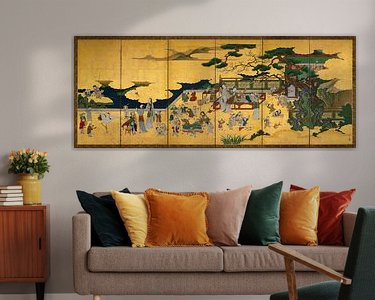


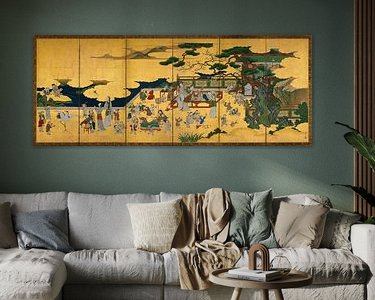



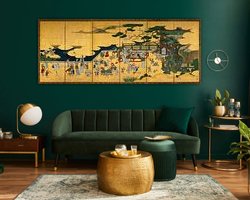
The signatures and red intaglio stamps that appear in the left and right corners of these brilliantly painted small-format screens read "painted by Kano Nuidonosuke Einō" and "Sansei" respectively. The character "San" (mountain) of the "Sansei" seal refers to Einō's father, Sansetsu (c. 1589-1651), whom he succeeded as the third head of the Kyoto-based branch of the prominent Kano family workshop. Arguably the most important family of painters in Japanese history, the house of Kano served as official painters for the imperial and military elite for more than four centuries. Einō not only excels in family style, but is also widely known as the author of History of Painting in This Realm (Honchō gashi), the first major history of painting written in Japan. His text, based on sketches by his father,
While the happy theme "Hundred Boys" first appeared in China during the Song dynasty (960-1279), these screens are indebted to prototypes from the later Ming era (1368-1644), when the subject also appeared widely on ceramics and other decorative art objects. The detail, variety, and large number of figures executed in high-quality pigments, along with other features of the screens' construction, indicate that the family that ordered them was aristocratic. They may have belonged to a bride's wedding trousseau, perhaps to inspire the creation of a large and joyful family.