Art code
Art code copied
You can't see it in full detail right now, but you certainly will on your wall soon!
Scroll to zoom in, drag to move the artwork.
Drag with your finger to move the artwork.

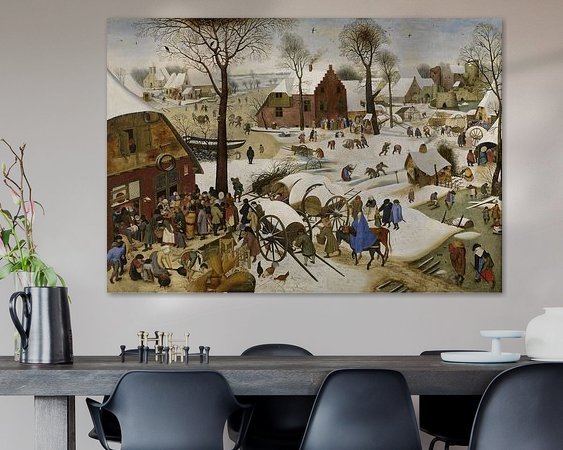
Already filled more than 375,000 walls!

Get even more inspired
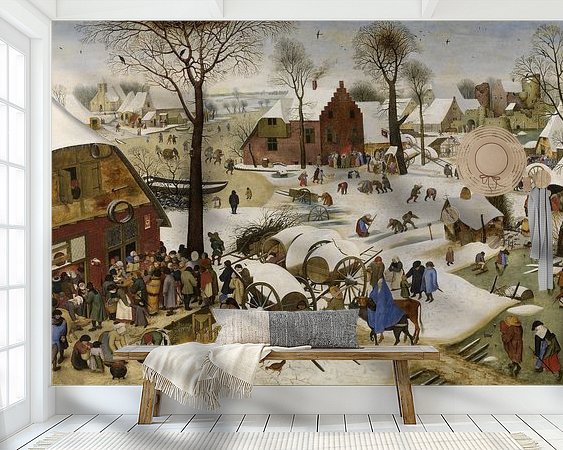
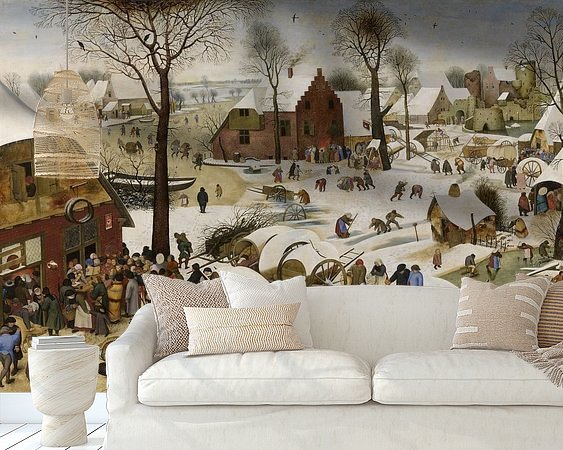
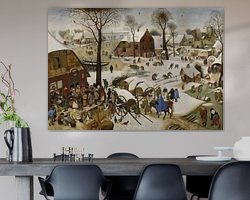
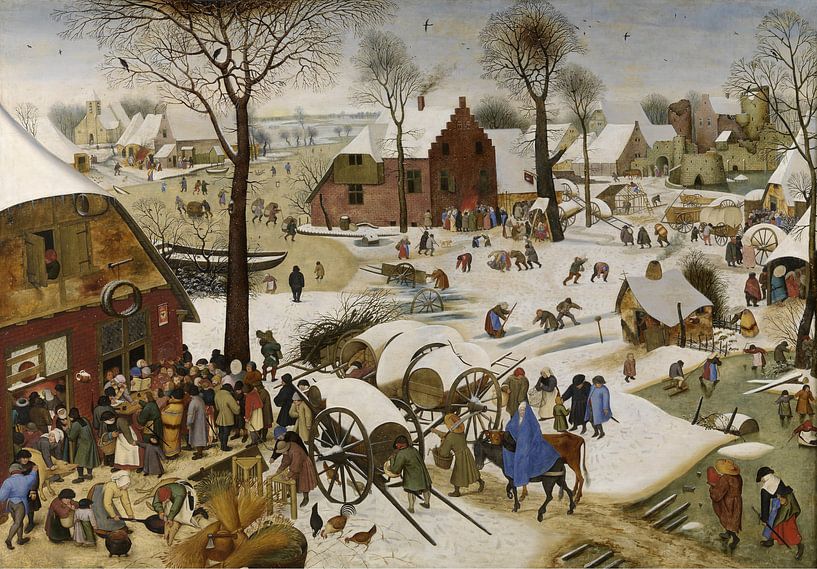
About ‘The census in Bethlehem, Pieter Brueghel the Younger’
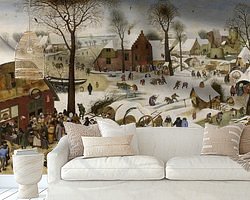
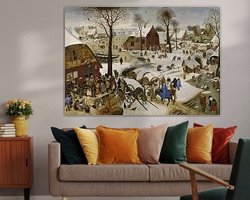
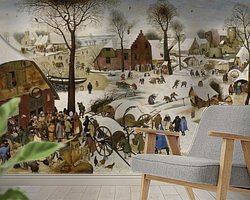
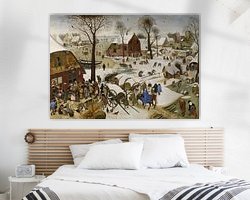
Census at Bethlehem is an oil painting by Flemish painter Pieter Bruegel the Elder painted in 1566, oil on panel. It shows a winter landscape with a scene depicting the census at Bethlehem at the time of Jesus Christ's birth, but in fact situated in a medieval village somewhere in Brabant.
The Census of Bethlehem refers to a Biblical theme (Luke, 2.1), but is set in the Middle Ages, in a Brabant village, set in a vast and snowy landscape. It is nearing evening, the sun is setting and the shadows are growing long. People are still outside, as social life in a medieval village, with its cramped, dark houses, actually always took place outside, even in winter. The connection to the story of the census at Bethlehem is first made by the title. Only after looking closely do we see Joseph among the snowy carts in the middle, pointing in the direction of the crowded inn. Behind him, Mary sits on a donkey, with an ox beside her. Bruegel emphatically, and entirely contrary to what was common at the time, does not assign Joseph and Mary a central place. They move (although depicted slightly larger) inconspicuously in the midst of everyday life, with which the artist as it were connects the transitory with the eternal. The veiled character of the main characters may also have to do with the time in which the work was painted, in 1566, the year of
Colors
Discover our ArtFrame
The modern canvas alternative
Your chosen art on a textile print, stretched in an aluminum or wooden frame. Quick and easy to change for a fresh look and exactly as you want it.
- High-quality print
- Easily replaceable
- Acoustic function
- Large formats possible
Discover the Old Masters collection


Customer reviews
4.8/5
Related collections