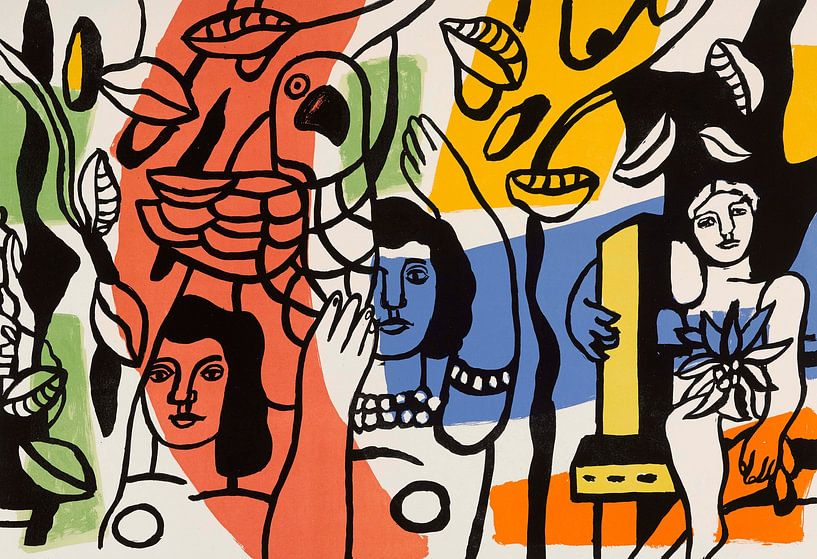






Fernand Léger's preliminary study for La Grande Parade shows well how the artist carefully constructed his compositions from simple, monumental forms. Léger was fascinated by modern life and collective experiences such as circus, theatre and parades. In this study, he explores the arrangement of figures, colour areas and rhythm within the picture plane. The people are not psychologically elaborated, but reduced to robust, almost sculptural forms, with clear contours and bright, contrasting colours. This creates a theatrical but also distant scene, in which the mass is more important than the individual. Léger wanted to renew painting by connecting it to the world of machines, posters and urban energy. This is already evident in this preliminary study: the figures appear as parts of a carefully composed construction. From this, La Grande Parade grows into an ode to movement, spectacle and the rhythm of modern, public life.