






Art code
Art code copied
You can't see it in full detail right now, but you certainly will on your wall soon!
Scroll to zoom in, drag to move the artwork.
Drag with your finger to move the artwork.


Already filled more than 375,000 walls!
Get even more inspired
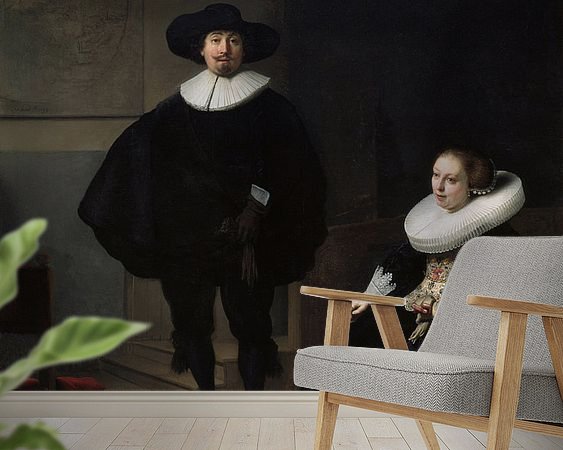
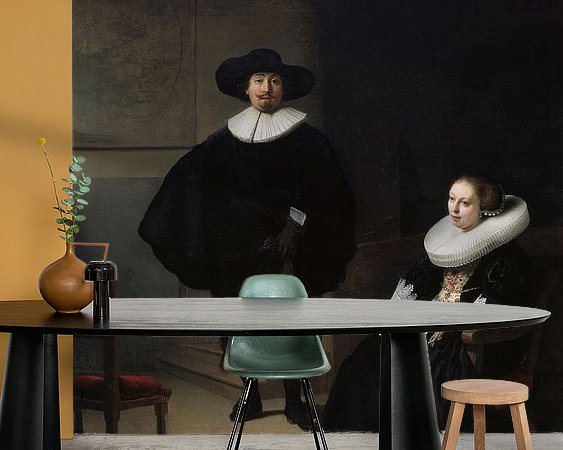
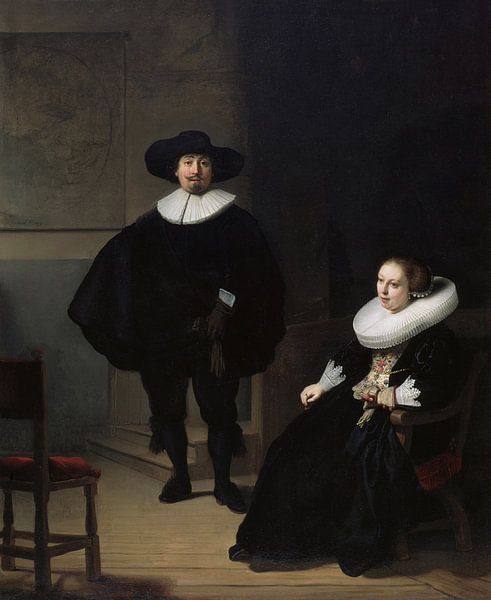
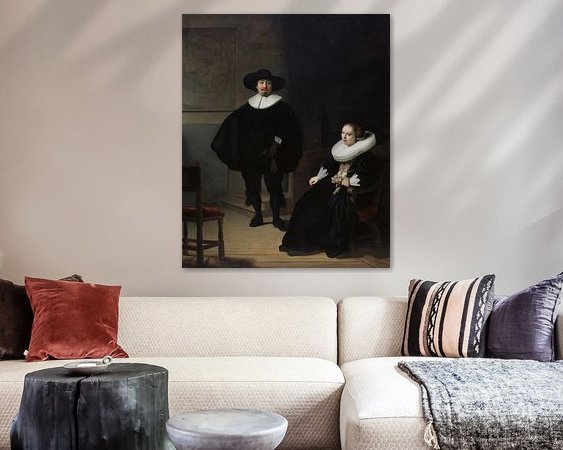
About ‘A lady and gentleman in black, Rembrandt - 1633’
The painting hung in the Isabella Stewart Gardner Museum in Boston, Massachusetts, before it was stolen on March 18, 1990.
Rembrandt Harmenszoon van Rijn (Leiden, July 15, 1606 - Amsterdam, October 4, 1669) was a Dutch painter, etcher and draughtsman. He is generally regarded as one of the greatest painters and etchers in European art, and as the most important Dutch master of the 17th century. Rembrandt produced approximately three hundred paintings, three hundred etchings and two thousand drawings. His work belongs to the Baroque period and is visibly influenced by Caravaggism, although he never visited Italy. His remarkable mastery of the play of light and dark, often using sharp contrasts (chiaroscuro) to draw the viewer into the picture, led to lively scenes full of drama.
The oeuvre of Rembrandt is divided by art historians[1] into five periods, beginning with the Leiden period (1625-1631). From about 1629, the development as an artist begins, with Rembrandt beginning to work with contrasts and his interest in the treatment of light, after 1640 a sobering begins. In the 1650s, brushstrokes are clearly visible and the colours richer.
Colors
Discover our ArtFrame
The modern canvas alternative
Your chosen art on a textile print, stretched in an aluminum or wooden frame. Quick and easy to change for a fresh look and exactly as you want it.
- High-quality print
- Easily replaceable
- Acoustic function
- Large formats possible
Discover the Old Masters collection










Customer reviews
4.8/5

Related collections