Art code
You can't see it in full detail right now, but you certainly will on your wall soon!
Scroll to zoom in, drag to move the artwork.
Drag with your finger to move the artwork.

Already filled more than 375,000 walls!
Get even more inspired
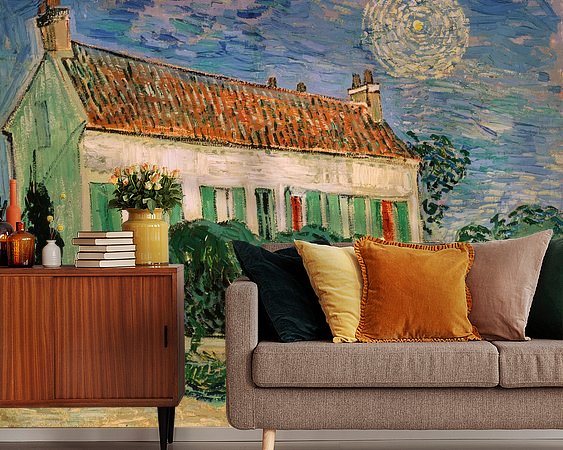
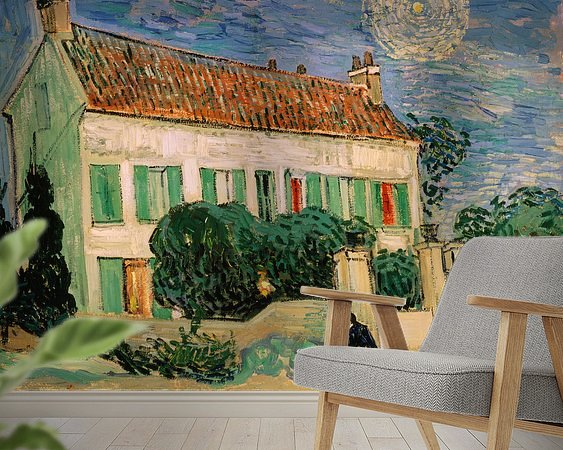
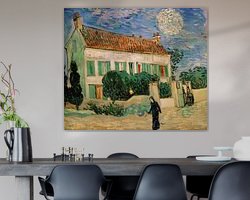
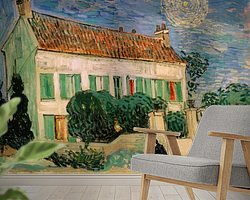
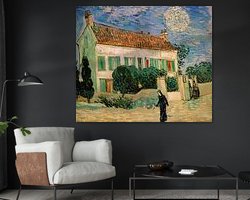
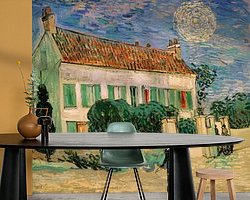
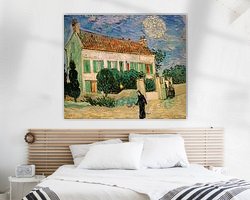
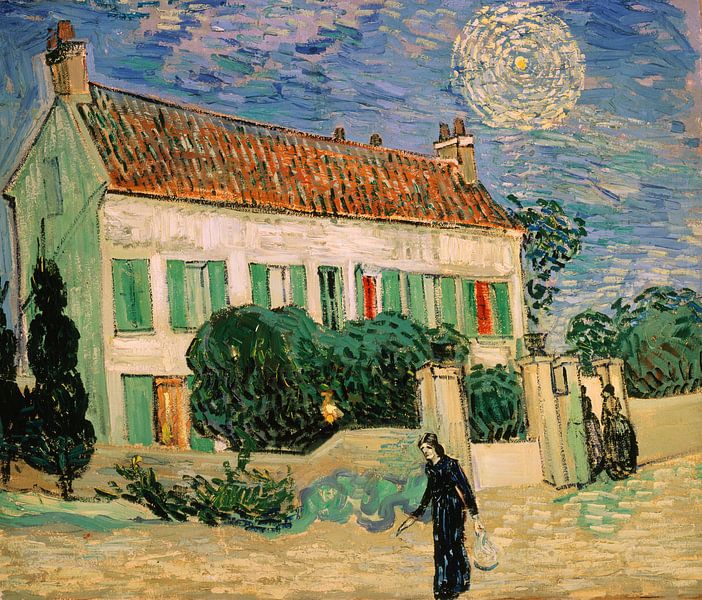
About ‘White House at Night, Vincent van Gogh’
In May 1890, Vincent van Gogh came to Auvers-sur-Oise and painted a series of pictures with houses. The Auvers period began with the hope of a new life and the recovery of health. This sense of hope was expressed in the pictures executed in May. In the June paintings, the motif of the home remained at the centre of the artist's attention, but its emotional range expanded greatly - from gloomy foreboding to conciliation. Since the emotion was expressed by the artist not through the subject itself, but through his manipulation of the methods of painting, the structure of his compositions changed each time. In the present picture a frozen quality prevails, and the chief lines are stable horizontals and verticals. They are needed to draw a house, but they can turn it into a prison. The artist gives much attention to windows, the "eyes" of a home. The red splashes of the windows to the right are alarming; Van Gogh would draw a star, a sign of fate, at moments of greatest anguish. The White House at Night expresses the great psychological tension under which Van Gogh found himself.
Colors
Discover our ArtFrame
The modern canvas alternative
Your chosen art on a textile print, stretched in an aluminum or wooden frame. Quick and easy to change for a fresh look and exactly as you want it.
- High-quality print
- Easily replaceable
- Acoustic function
- Large formats possible
Discover the Old Masters collection

Customer reviews
4.8/5
Related collections