 Masterful Masters


Art code
Art code copied

You can't see it in full detail right now, but you certainly will on your wall soon!
Scroll to zoom in, drag to move the artwork.
Drag with your finger to move the artwork.

Already filled more than 400,000 walls!
Get even more inspired
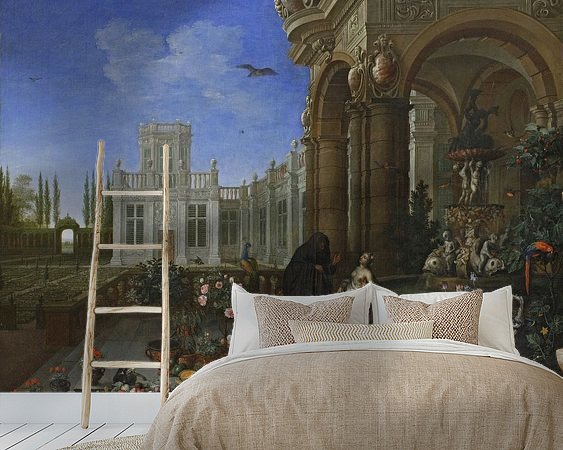
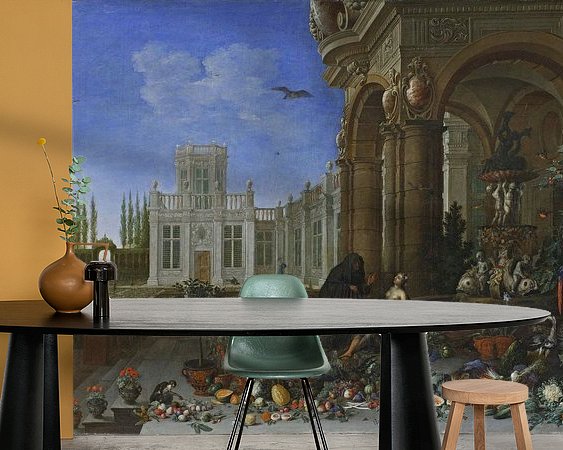
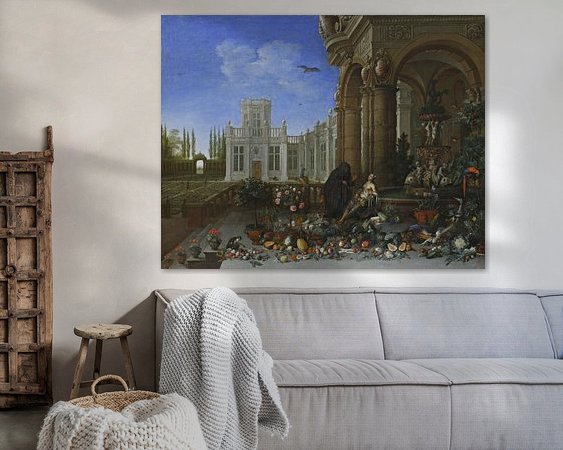
About ‘Vertumnus and Pomona at the palace terrace, Peeter Gijsels’
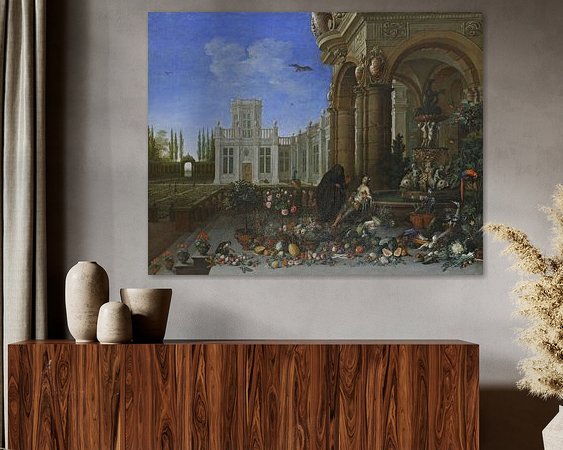
Vertumnus and Pomona at the palace terrace, Peeter Gijsels (1680)
Peeter Gijsels is a typical representative of the so-called Golden Age, the heyday of Dutch art in the 17th century. In the painting by Gijsels, the abundance of foreign animals, exotic fruits and vegetables is striking, from which it can be deduced that this is a symbolic representation.
In the painting Palace Terrace with Vertumnus and Pomona, a witch-like old woman can be seen. She bends down to a naked young woman, who raises her hand defensively. This is a story from Ovid's Metamorphoses: Vertumnus, the mutable god of vegetation, in the guise of an old bawd, tries to seduce the gardener Pomona, who denies men access to her garden. With the motif of the garden, Gijsels refers back to the closed garden (Latin: hortus conclusus), symbolic of Mary's virginity. In contrast to Mary's story, here the plan seems to succeed, at least this is suggested by the little Cupid peeking out from behind Vertumnus.
Colors
Discover our Canvas
Classic and timeless material
Art on canvas looks great on any wall. It truly comes into its own with paintings featuring sharp brushstrokes.
- Fine-art quality
- Frame made from sustainable wood
- Durability of at least 10 years
- Available with shadow gap frame
Discover the Old Masters collection


Customer reviews
4.8/5
