 Masterful Masters




Art code
Art code copied

You can't see it in full detail right now, but you certainly will on your wall soon!
Scroll to zoom in, drag to move the artwork.
Drag with your finger to move the artwork.

Already filled more than 375,000 walls!

Get even more inspired
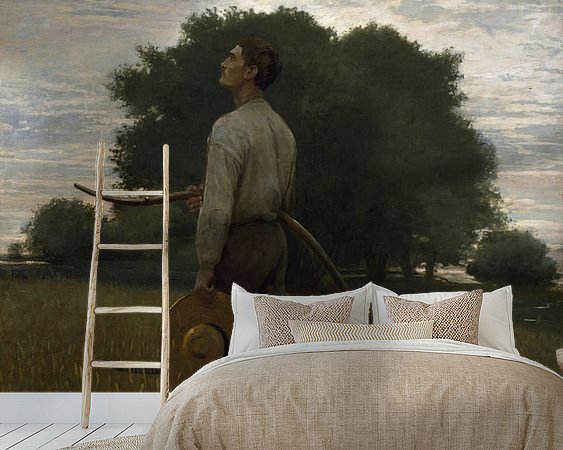
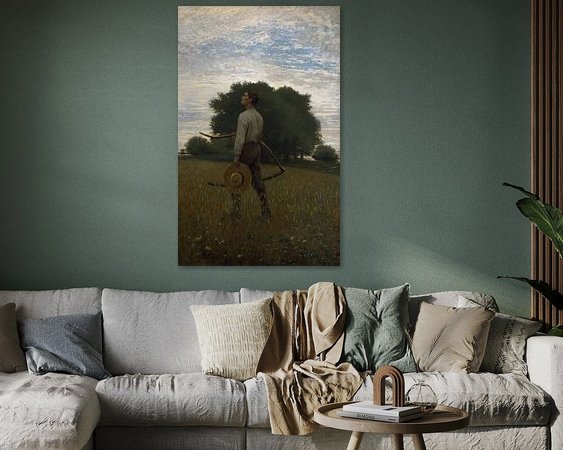
About ‘Song of the Lark, Winslow Homer’
Song of the Lark, Winslow Homer (1874)
During the decades following the Civil War, Winslow Homer forged his reputation as America's foremost painter of everyday life. Homer's realist depictions of laboring farmers, rugged wilderness guides, and storm-tossed New England fishermen stressed the powerful and sometimes perilous relationship between man and nature. This relationship is at the heart of Song of the Lark, in which a young farmer enters his fields at sunrise to begin a day of reaping and is momentarily transfixed by the call of an unseen bird, creating a transcendent communion of man and the land that sustains him. Homer portrays his farmer as an heroic individual who stands firmly in his field, clutching his hat and scythe. The farmer's scythe is an interesting detail here, for by the mid-1870s American farmers had largely replaced it with Cyrus McCormick's more efficient mechanical reaper. By depicting his farmer with a scythe, Homer nostalgically alludes to an earlier, simpler era in American farm life, when rugged individuals worked their land manually and alone.
Colors
Discover our Canvas
Classic and timeless material
Art on canvas looks great on any wall. It truly comes into its own with paintings featuring sharp brushstrokes.
- Fine-art quality
- Frame made from sustainable wood
- Durability of at least 10 years
- Available with shadow gap frame
Discover the Old Masters collection




Customer reviews
4.8/5
