 Masterful Masters
Art code
Art code copied

You can't see it in full detail right now, but you certainly will on your wall soon!
Scroll to zoom in, drag to move the artwork.
Drag with your finger to move the artwork.

Already filled more than 375,000 walls!
Get even more inspired
About ‘A Gentleman’s Table, Claude Raguet Hirst’
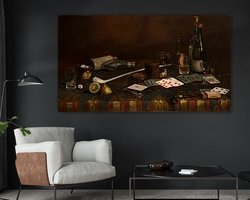
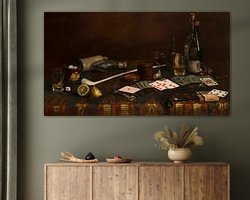
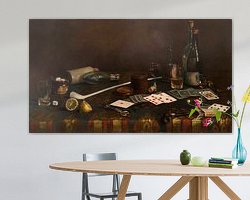
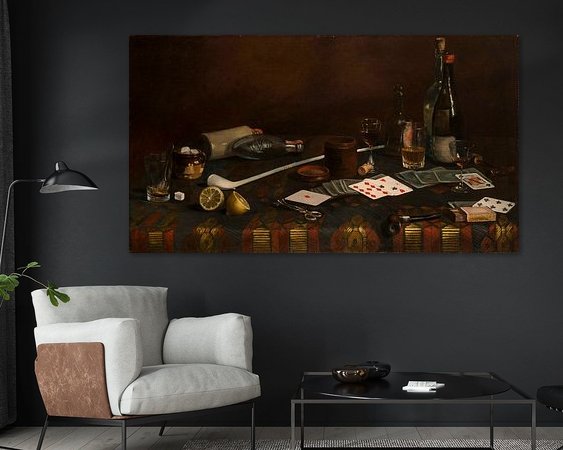
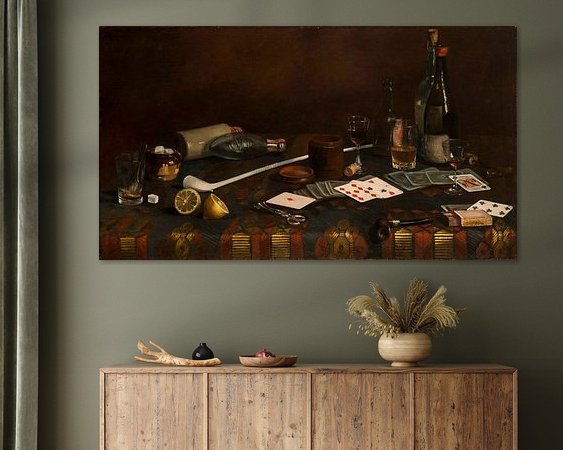
A Gentleman’s Table, Claude Raguet Hirst
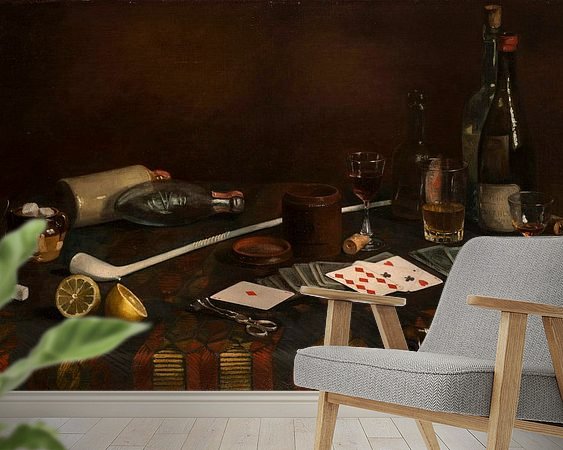
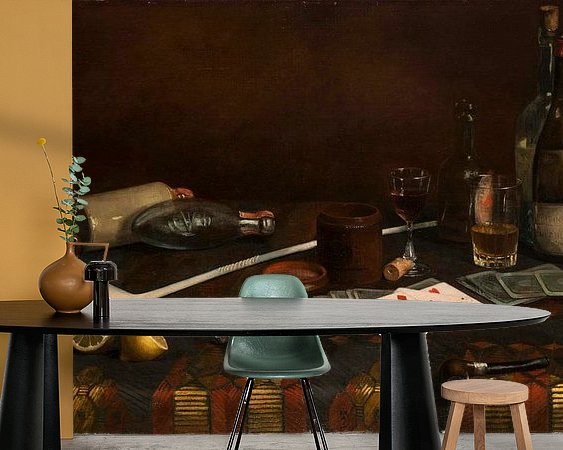
Commissioned for a Chicago men’s club, Claude Raguet Hirst’s “A Gentleman’s Table” subtly critiques masculine pastimes while still appealing to male patrons. The work’s hyper-realistic style exemplifies a traditional technique called trompe l’oeil, French for “deceives the eye.” At the time, trompe l’oeil works were typically painted by and for men. Hirst claimed the method as her own and refashioned it with messages appealing to female viewers. Her skill rendering tight contours, tonal values, reflections, and textures resulted in successful illusionistic images.
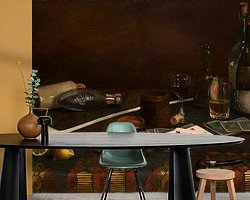
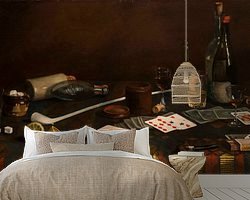
“A Gentleman’s Table” includes several bottles of alcohol and a corkscrew (with a cork still attached) to indicate that drinking is ongoing at this gathering. It is as if the table’s occupants have just stepped away for a moment and will return to finish their game and drinks. At the lower left of the painting the combination of glass, spoon, sugar cube, and lemon likely suggest the presence of absinthe, seen as a potent and potentially lethal liquor.
Whereas the trompe l’oeil paintings by Hirst’s male contemporaries cast masculine leisurely pursuits in a postive light, “A Gentleman’s Table” offers a discourse on late 19th century social ills. In Hirst’s hands, typical accoutrements, such as pipes, cards, and glasses, may allude to vices, including gambling and alcoholism, both ingrained in male culture at the time and of particular concern to many women of the day.
Colors
Discover our Canvas
Classic and timeless material
Art on canvas looks great on any wall. It truly comes into its own with paintings featuring sharp brushstrokes.
- Fine-art quality
- Frame made from sustainable wood
- Durability of at least 10 years
- Available with shadow gap frame
Discover the Old Masters collection














Customer reviews
4.8/5